

Innovation
March 25, 2026
The HANBIT-Nano case shows how assembly, compression, and seal integrity are decisive factors in engineering systems



The history of humanity has always been defined by how we master and transform energy. We began with the heat of fire, advanced to the kinetic force of rivers to grind grain, and evolved exponentially. Today, innovation allows us to even split atoms inside nuclear fission reactors to generate electricity. This journey — from fire to fission — proves that energy is our driving force.
All technological and industrial advances in the modern world are guided by energy; it is our connecting thread. However, the exponential growth in demand places us before a complex challenge: How can we ensure production, optimize distribution, and maintain global sustainability at the same time?
The urgency is real. As highlighted by the International Energy Agency (IEA), the world is facing an unprecedented global energy crisis. This scenario of high demand and scarcity coincides with the crucial need for an accelerated transition in our energy matrix, forcing industry to seek immediate thermal efficiency solutions.
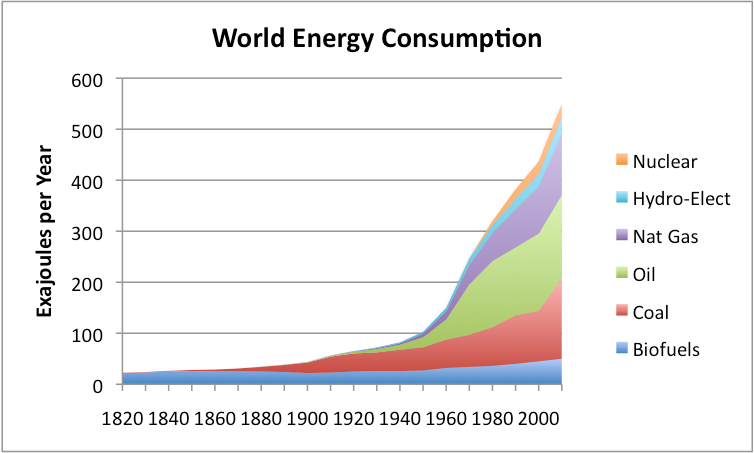
World energy consumption over the years
Global energy consumption by source, based on estimates from Vaclav Smil's Energy Transitions: History, Requirements, and Prospects, together with BP statistical data for 1965 and subsequent years. Chart compiled by G. Tverberg (2012) on Our Finite World.
Energy demand is reaching a boiling point: while the planet fills with new industries, electric vehicles, and Artificial Intelligence data centers, the urgency to abandon polluting and expensive sources such as coal and natural gas grows. The dilemma is clear: renewable alternatives are essential, but they still face the challenges of intermittency and high costs per gigawatt generated. This pressure is pushing industry to react with immediate efficiency measures.
How will we navigate this transition? In this article, we explore three innovation fronts that will shape our energy future:
The promise of nuclear fusion: exploring investments and the potential of fusion as a clean and limitless energy source.
The impact of artificial intelligence: analyzing global energy consumption driven by data centers and the need for efficiency.
Solving intermittency: understanding how reversible hydropower plants can support renewable energy and stabilize the grid.
If there is a Holy Grail capable of solving the global energy crisis for good, it is nuclear fusion. Governments, global powers, and scientific consortia are investing billions of dollars in what is arguably the most crucial technological race of the century. The goal: to replicate in the laboratory the most powerful energy source in the universe.
What makes fusion so revolutionary is its operating principle. While nuclear fission (used in today’s power plants) splits heavy uranium atoms — releasing energy but producing long-lived radioactive waste — fusion does the opposite: it fuses hydrogen atoms to form helium.
This is literally the same process that powers the Sun and the stars, releasing colossal amounts of energy in a clean, safe, and virtually inexhaustible way.
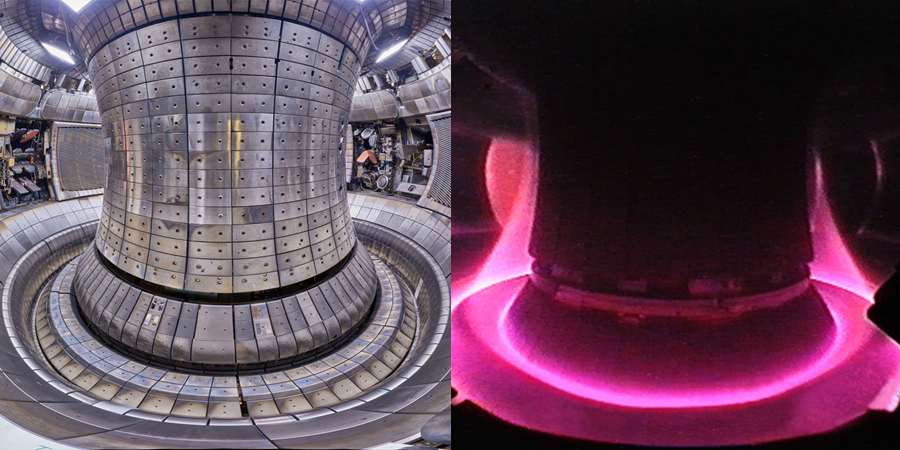
Nuclear Fusion Reactor — Max Planck Institute for Plasma Physics (IPP)
The potential is immense: just 1 gram of hydrogen can generate the same amount of energy as 20 tons of coal. Beyond efficiency, fusion offers a clean and safe alternative that does not produce long-lived radioactive residues.
The challenge, however, is replicating the Sun’s conditions on Earth. Fusion requires temperatures above 50 million °C and pressures comparable to those found in stellar cores. Achieving this demands cutting-edge materials and state-of-the-art thermal insulation.
Global projects such as ITER (International Thermonuclear Experimental Reactor) and WEST (Tungsten Environment in Steady-state Tokamak) have achieved exponential progress. If maintaining a stable reaction for 5 seconds was once groundbreaking, the new world record — achieved by WEST — is an impressive 22 minutes.
Despite the advances, commercial fusion power plants remain years away. While the future is being built, industry must rely on immediate and complementary solutions to enable energy transition and optimize consumption — which leads us to the next topic.
We are caught in a paradox: while energy transition pushes us toward clean sources, the digital revolution drives global electricity demand to unprecedented levels. This tension places extreme pressure on industrial infrastructure and requires relentless efficiency.
The rise of Artificial Intelligence (AI) is the clearest symbol of this challenge. Training and operating Large Language Models (LLMs) like ChatGPT and Copilot requires massive processing power — which translates into enormous energy consumption and intense thermal loads inside data centers.
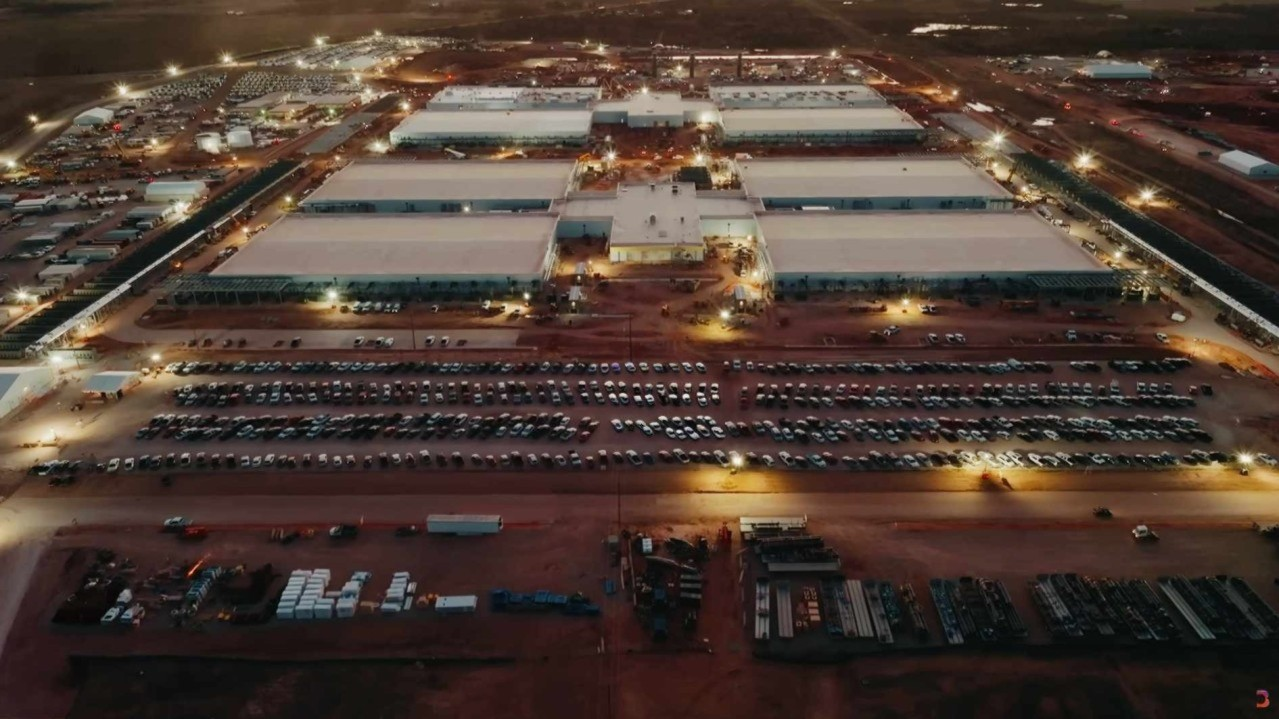
Project Stargate — dedicated to building infrastructure for AI
Studies show that data centers supporting LLMs consume up to 30 times more energy than traditional IT operations. To illustrate the exponential demand, OpenAI CEO Sam Altman revealed the company’s astonishing ambition: to grow from the current 2 GW to 250 GW of installed capacity by 2033.
For comparison, 250 GW is more than the entire installed electrical capacity of Brazil, which today totals around 213 GW (across hydropower, nuclear, solar, and wind).
The fact that a single AI company could require more energy than the fifth most populous country in the world highlights the magnitude of the challenge.
This scenario exposes the core dilemma: AI and digitalization are engines of progress, but their expansion depends on a strong, resilient energy matrix.
Without urgent investment in thermal efficiency, diversification of sources, and energy storage, the growth of AI will overwhelm power grids and jeopardize the sustainability of the energy transition itself.
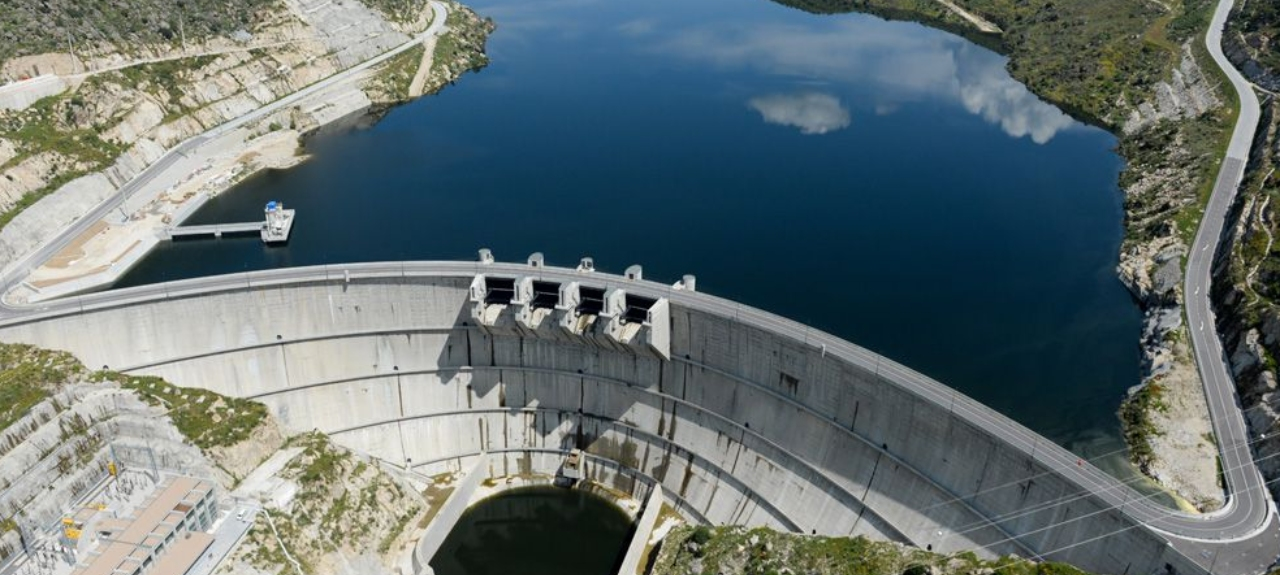
First introduced nearly a century ago, reversible hydropower plants are regaining prominence in global energy discussions.
They operate similarly to conventional hydro plants, but with a crucial difference: dual functionality. In addition to generating energy by water flow, they can pump water back to the upper reservoir during periods of excess electricity production — especially from intermittent sources like solar and wind.
This storage model dominates the global landscape, accounting for about 90% of the world’s energy storage capacity.
Its relevance is critical because electrical grids cannot store energy: consumption must always match generation in real time. Reversible hydro plants are the most mature technology available to balance this flow.
By storing and reusing surplus renewable energy, these plants become key pillars of large-scale energy transition, stabilizing the grid, reducing waste of clean energy, and enabling economically viable expansion of sustainable sources.
From the futuristic promise of nuclear fusion to the immediate pressure of artificial intelligence on the electrical grid — and the strategic role of reversible hydropower plants — one point becomes undeniable: the future of energy demands diversity, innovation, and above all, efficiency.
The energy race is not just about generating gigawatts, but about ensuring quality, resilience, and intelligent use of thermal resources.
Producing clean energy, storing it efficiently, reducing thermal losses, and consuming it precisely are essential to sustain technological growth, enable decarbonization, and ensure global industrial competitiveness.
In a world where every degree and every watt matter, high-performance thermal insulation stops being a cost and becomes a strategic asset.
Did you enjoy this content? Share it with those who take energy efficiency seriously — whether improving the energy matrix or investing in advanced thermal solutions for industrial applications!

The HANBIT-Nano case shows how assembly, compression, and seal integrity are decisive factors in engineering systems

Understand the difference between purchasing a product and investing in an engineering solution by utilizing accurate diagnostics to prevent financial losses and guarantee operational efficiency.

In hot-stamping metal processes or in the production of ceramic coatings, glass, and porcelain, ceramic rollers play a key role in supporting and conveying pieces through continuous furnaces that often operate at temperatures exceeding 1,000 °C.

 Carregando...


