


Innovation
March 25, 2026
The HANBIT-Nano case shows how assembly, compression, and seal integrity are decisive factors in engineering systems



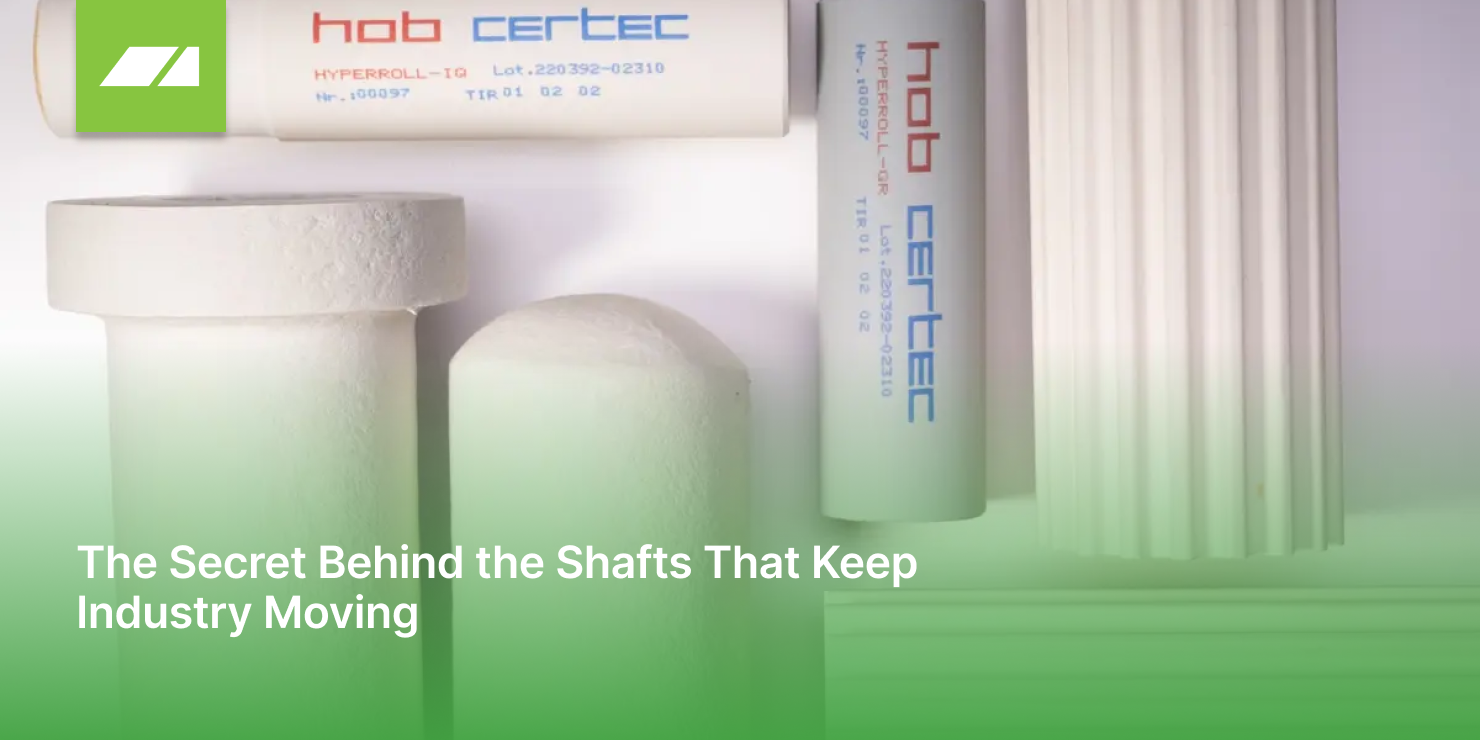
Although they may seem simple, these rollers work under intense thermal and mechanical loads, ensuring flatness, process repeatability, and final product quality.
To perform reliably in such harsh environments, Perfil Térmico’s Ceramic Rollers are manufactured using corundum (α-Al₂O₃) and mullite (3Al₂O₃·2SiO₂) — two high-performance refractory materials renowned for their exceptional thermal resistance and mechanical strength.
Corundum is the most stable crystalline form of alumina (α-Al₂O₃), with a melting point above 2,000 °C and a hardness of 9 on the Mohs scale — the same as ruby and sapphire.
This combination makes it ideal for thermally and abrasively demanding environments, ensuring:
Dimensional stability even under high temperatures
Superior chemical resistance to aggressive agents
Controlled thermal conductivity, promoting even heat distribution along the roller axis
Mullite, obtained by sintering alumina and silica, is less dense than corundum and provides an indispensable property: exceptional resistance to thermal shock.
Its low thermal expansion coefficient prevents cracking under abrupt temperature changes, ensuring structural integrity throughout repeated thermal cycles.
Additionally, the presence of mullite helps reduce the roller’s overall weight, facilitating handling and reducing the mechanical load on bearings, motors, and supports.
Perfil Térmico’s Ceramic Rollers are available in different models — each with distinct advantages — making them a complete solution for various industrial applications. They can operate at temperatures up to 1,300 °C, making them ideal for hot-stamping, heat treatment, and the production of tiles, porcelain slabs, and sanitary ware.
Key advantages include:
Superior production quality, maintaining dimensional precision and edge alignment
Higher overall production efficiency, minimizing cracks and maintenance downtime
Resistance to thermal shock, mechanical stress, and chemical attack, without warping or deformation
More stable and efficient processes
Type W Ceramic Rollers differ from standard rollers due to their longitudinal grooves. These grooves collect residues and prevent the formation of dirt rings — typically caused by the accumulation of USIBOR® steel residues on the roller surface, which can compromise product quality.
Specially designed for the automotive industry and hot-stamping processes, these rollers operate at temperatures up to 1,320 °C, maintaining rigidity under continuous load and distributing heat uniformly. The result is longer service life, better product quality, and a remarkable increase in production consistency, even in corrosive environments and under thousands of thermal cycles.
The outstanding performance of Perfil Térmico’s Ceramic Rollers is the result of synergy between material science and applied thermal engineering. The combination of corundum and mullite produces a roller that offers:
High thermal and mechanical resistance
Dimensional stability under load
Chemical resistance to vapors, glazes, and aggressive atmospheres
Extended durability with minimal maintenance
These attributes make ceramic rollers indispensable in industrial applications that demand precise thermal control, dimensional accuracy, and continuous productivity — whether in ceramic kilns, steel plants, or metal heat treatment furnaces.

The HANBIT-Nano case shows how assembly, compression, and seal integrity are decisive factors in engineering systems

Understand the difference between purchasing a product and investing in an engineering solution by utilizing accurate diagnostics to prevent financial losses and guarantee operational efficiency.

Energy in Transformation

 Carregando...


