

Market
August 19, 2026
Understand why CUI can remain hidden, the impacts it can have on operations, and how different insulation systems influence asset inspection and maintenance.



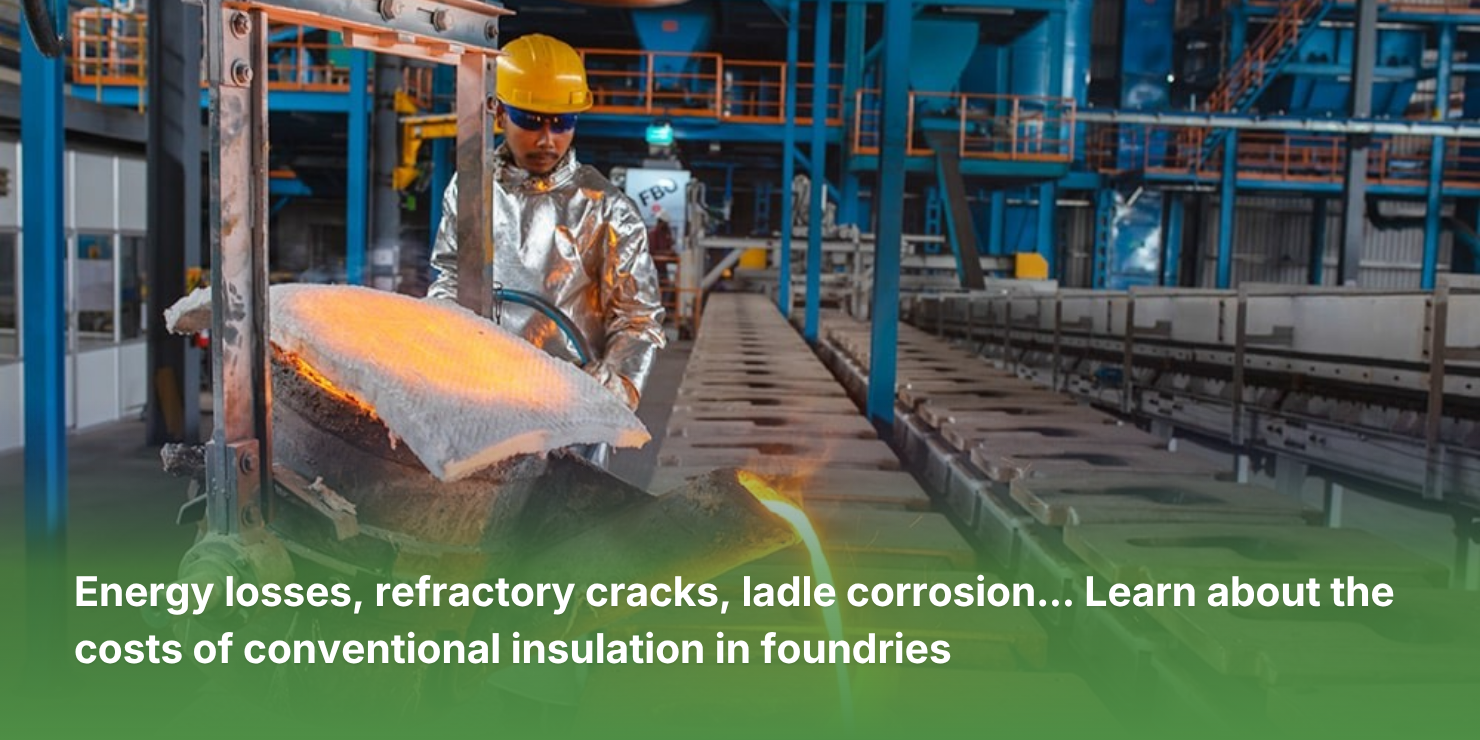
In the foundry and steel industries, the thermal insulation of equipment such as melting furnaces, transfer ladles and tundishes is still often seen only as a cost associated with the operation of the equipment. However, due to the extremely high temperatures involved in these components, a proper specification of thermal insulation acting as refractory backup has a much deeper impact than is usually assumed.
When there is no thermal insulation in the equipment, or when it is not properly specified for its application, the impacts are direct and significant, but they often go unnoticed in the analysis of operating costs:
High expenses with electricity, gas or oil are often absorbed simply as equipment “operating costs”.
Premature replacement of refractory materials, due to cracks and material wear, is often treated as “necessary recurring maintenance”.
Severe corrosion and deformation of foundry ladles tend to be interpreted as “inevitable consequences of the thermal process”.
However, all these impacts are associated with the same factor: the high heat flow through the equipment walls, caused by the poor performance or absence of thermal insulation.
At this point, it is worth understanding in simple terms how this loss occurs — according to the laws of physics. Heat always flows from the region of higher temperature to the region of lower temperature. In a flat wall, this behavior is described in simplified form by Fourier’s Law:
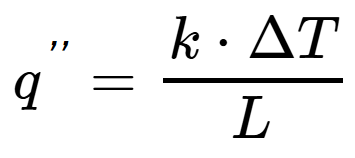
Where:
q'' = heat flow per unit area, measured in W/m²
ΔT = difference between the hot-face temperature and the cold-face temperature of the system, measured in °C or K
L = thickness of the layer crossed by heat, measured in meters
k = thermal conductivity of the material, measured in W/m·K
This equation shows that heat flow increases when the temperature difference is higher and when the material conducts heat more easily. On the other hand, this flow decreases as the thickness of the layer increases.
In thermal process equipment, such as melting furnaces and foundry ladles, the temperature difference (ΔT) is practically determined by the process itself. To melt steel, for example, temperatures above approximately 1370 °C are required. In other words, there is little room to act on this parameter.
There are, therefore, two main ways to reduce thermal loss: increase wall thickness or use materials with lower thermal conductivity.
The first option has a rather evident limitation. Increasing wall thickness compromises the useful volume and capacity of the equipment, reducing process productivity.
It is precisely in the second option — related to thermal conductivity — that the choice of insulation begins to directly impact the costs of the operation. Today, there are already solutions with thermal conductivity up to 10 times lower than that of traditional ceramic fiber-based materials, allowing heat loss to be reduced without the need to increase the thickness of the insulation.
This means that the same equipment can operate at its ideal process temperature with much lower thermal losses and, consequently, with lower operating costs, without sacrificing useful volume. In virtually all cases, this reduction can be achieved without increasing wall thickness.
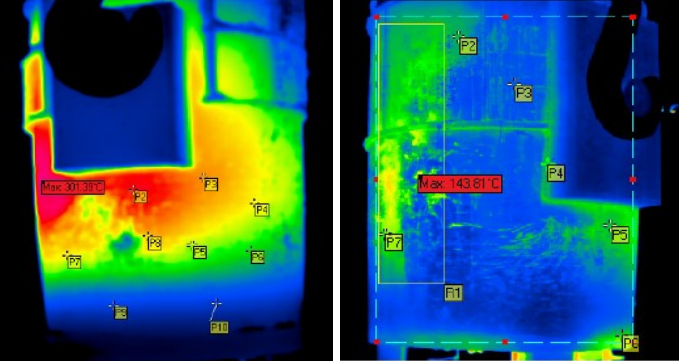
Comparison of the surface temperatures of a foundry ladle after liquid steel discharge.
Left: without microporous system | Right: with microporous system
The reduction in heat flow deserves special attention. Since this equipment is composed of multiple layers — such as refractories, insulation and metallic shell, lower heat transfer reduces the temperature throughout the entire assembly and reduces thermal fatigue on the system.
As a result, the metallic shell starts operating at lower temperatures, which reduces corrosion-related wear, a phenomenon intensified at high temperatures. At the same time, the refractories become less susceptible to premature wear and cracking caused by ladle ovalization.
Reducing thermal losses not only lowers costs related to electricity, gas or oil, but also helps preserve plant assets, reduce the need for interventions by increasing MTTR (Mean Time to Repair) and increase the reliability of the industrial process.
For these reasons, especially in foundries and steel plants, not using thermal insulation in equipment or specifying thermal insulation based only on the maximum catalog temperature or the initial material cost often becomes expensive. As shown throughout this blogpost, the use of thermal insulation optimized for the application directly impacts operating cost, equipment service life and industrial process reliability.
Choosing high-performance solutions is a safe and direct way to reduce thermal losses, preserve plant assets, reduce CO2 emissions and improve the overall efficiency of the operation. The ROI of this investment can be reliably estimated through a technical analysis that considers the actual operating conditions of the equipment — and, for this, you can rely on Perfil Térmico to carry out these analyses at no cost and with no obligation.
If you want to evaluate for yourself the reduction that high-performance insulation materials, such as Microporous Insulation Materials, can bring to the thermal losses of your operation, access SIFT — Integrated Thermal Flow Simulator by Perfil Térmico and run as many simulations as you want, free of charge.
Based on the materials and thicknesses used in the insulation, refractory and structure of your equipment, SIFT estimates the thermal losses of the application and delivers reliable results, validated by the Brazilian industry for more than 15 years.

Understand why CUI can remain hidden, the impacts it can have on operations, and how different insulation systems influence asset inspection and maintenance.

Technical Discussions on Opportunities to Advance Industrial Thermal Processes.
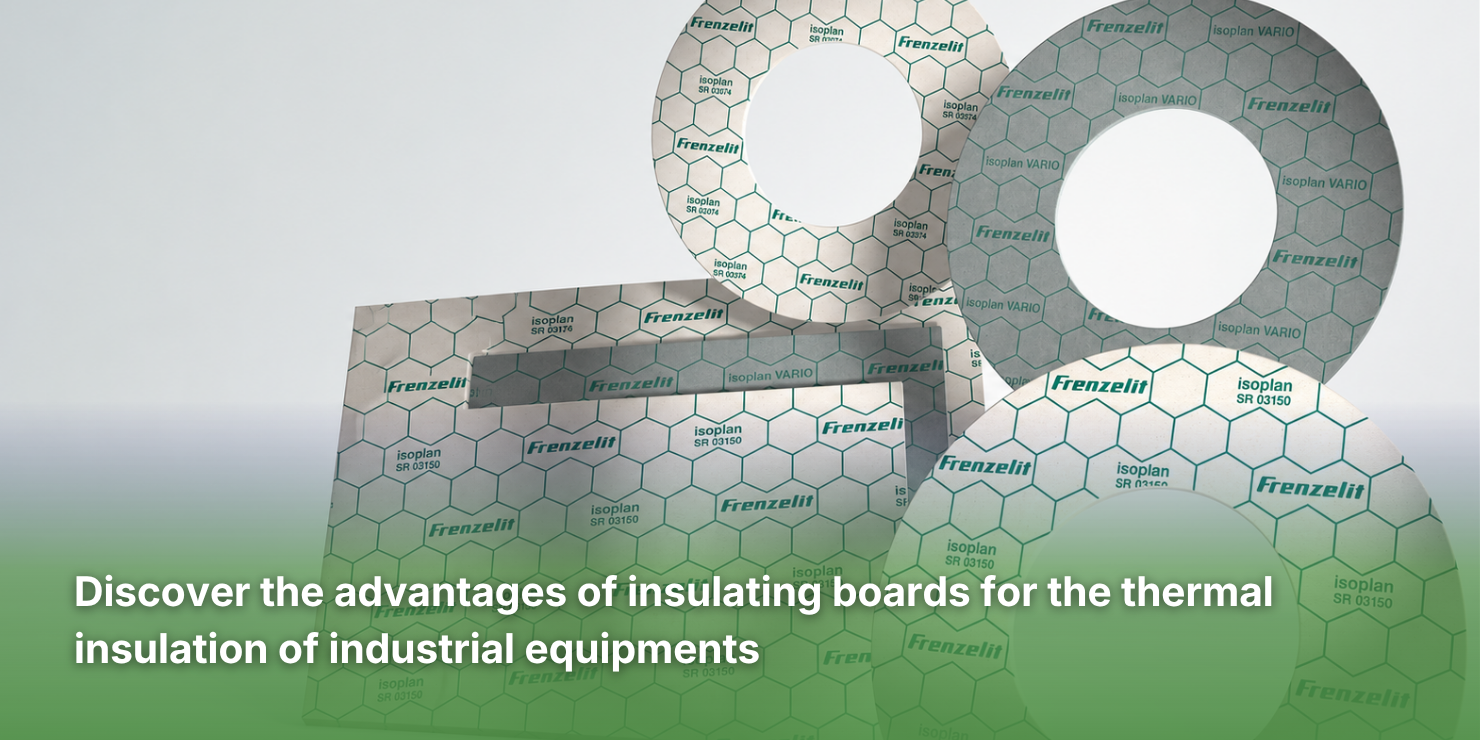
Used in a wide range of industrial applications, insulating boards offer important properties for the thermal insulation of equipment

 Carregando...


