

Mercado
October 16, 2026
As altas temperaturas industriais e a eficiência energética na ABM Week



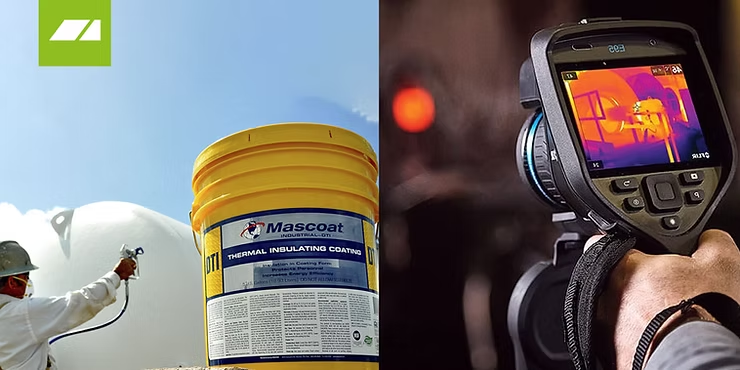
Over many years of manufacturing insulating coatings, Mascoat has always tried to find an infrared reading device that would deliver accurate results. All types of instruments have been used, from the simplest to the most sophisticated infrared cameras and thermometers.
We consulted FLIR™ and many other manufacturers in search of an answer, but none of them were able to explain why these erroneous readings occurred, consistently showing values higher than those measured by contact thermocouples and other reliable measurement methods.
Most infrared device vendors noticed that the coating produced strange results in their readings, showing a higher temperature than the actual one recorded by contact thermocouples. Many of these vendors offered to look for an explanation, but none ever came back with answers.
During a demonstration fair, Paul Wahl Instruments was presented with this challenge and generously accepted it. They explained to Michael Stelmach (Mascoat associate) why they believe infrared reading instruments struggle with these coatings. The following description is exactly as received in their email:
“Hello Mike,
I tested your product in an attempt to demonstrate its properties with a thermal imaging camera. The tests were done using heated plates, applying heat to one side of an aluminum sheet. I took the sample you provided, cut it into smaller pieces, and removed the insulation from half of one plate. This piece was tested at 200 °F (93.3 °C) and 400 °F (204.4 °C).
What I found was that when I measured the piece with the thermal camera (HSI3000) and a spot infrared thermometer (DHS115), the coated section showed 185 °F (85 °C) on the 200 °F (93.3 °C) plate and 380 °F (193.3 °C) on the 400 °F (204.4 °C) plate.
I then used a resistance temperature detector (RTD or Pt100 with a Novus DC80R) to measure the temperature on both coated and uncoated areas.
The uncoated sides were approximately 380 °F (193.3 °C) and 400 °F (204.4 °C), as expected. The coated sides were approximately 145 °F (62.7 °C) and 270 °F (132.2 °C), which is very different from the infrared readings. I know these measurements were correct because I was able to place my finger on the 145 °F (62.7 °C) surface for a long time without any burn.
Why? What I believe is happening is that as the coating heats up, it transmits infrared energy in the 8–14 micron range—which is exactly the range used by these devices to measure temperature.
The emissivity was set at 0.95. If the emissivity value were lowered, the readings would be even higher, in some cases exceeding the actual hot plate temperatures.
In the technical datasheet, transmittance is listed as 0.0. Under what conditions was this test done? I suspect that at 200 °F (93.3 °C), the percentage of transmittance in the 8–14 micron range is not zero. I believe that since the coating has air in its composition, infrared radiation passes through it, resulting in an erroneous reading.
The concern is that users with piping, furnaces, and ovens coated with this product might use standard market infrared cameras and meters and end up with inaccurate readings, making it look as though the product is not performing as a good insulator. I cannot reach any conclusion other than transmission in the measurement range (8–14 microns) being the cause of these errors.
To demonstrate the material’s efficiency, we know cameras and infrared thermometers are not a good method, and I do not recommend them. I believe a contact measurement on a heated plate with half of it insulated would be the best approach. From what I understand, you already use the touch method in demonstrations. The meters help quantify this method and show numbers. It is also a much cheaper method than using a thermal imaging camera.
Jim”
Article written by James S. Eldridge, Product Development Manager at Palmer/Wahl Instruments, Inc.

As altas temperaturas industriais e a eficiência energética na ABM Week
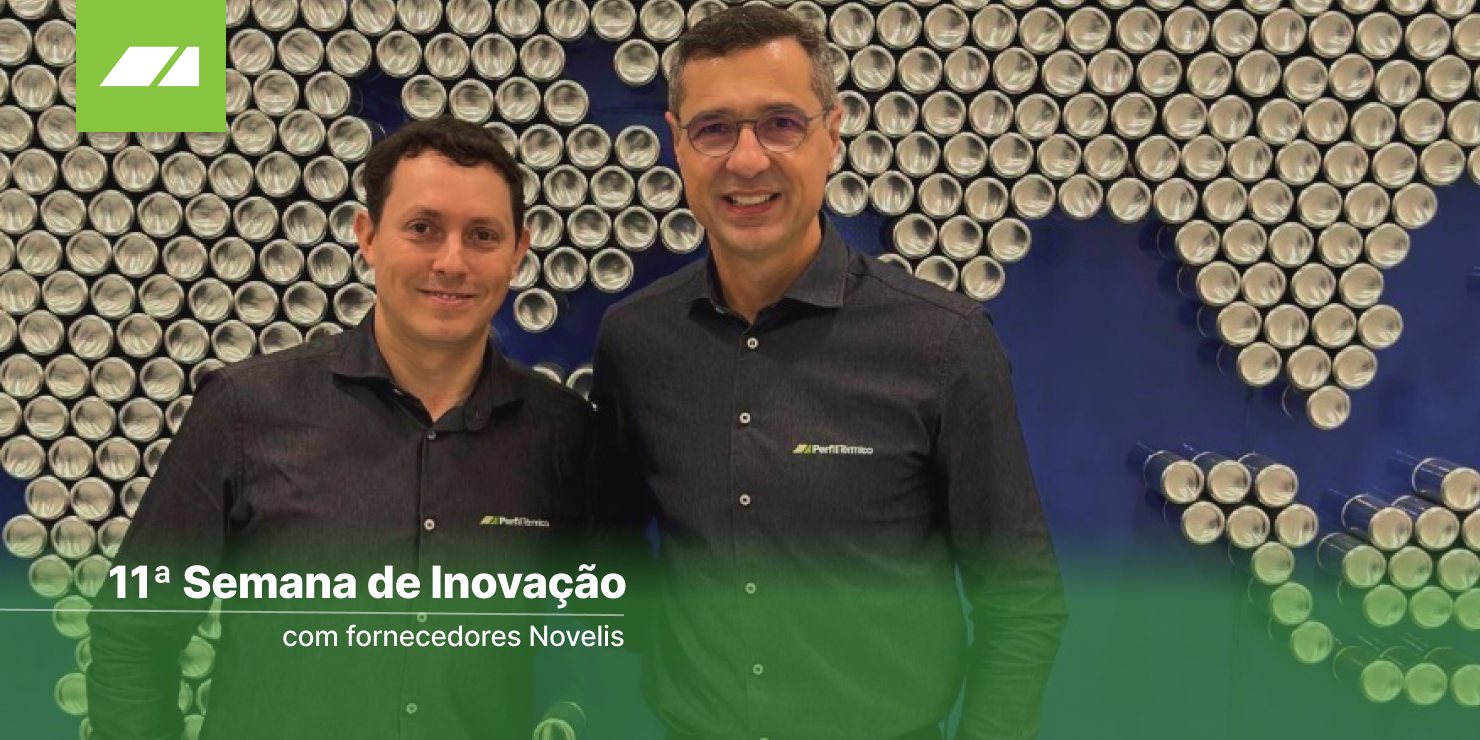
A Perfil Térmico participou da 11ª Semana de Inovação com Fornecedores da Novelis, uma das principais referências mundiais em laminação e reciclagem de alumínio, e o encontro confirmou algo que acompanhamos de perto no dia a dia da indústria: as soluções mais consistentes surgem quando cliente e fornecedor trabalham juntos com a mesma visão.
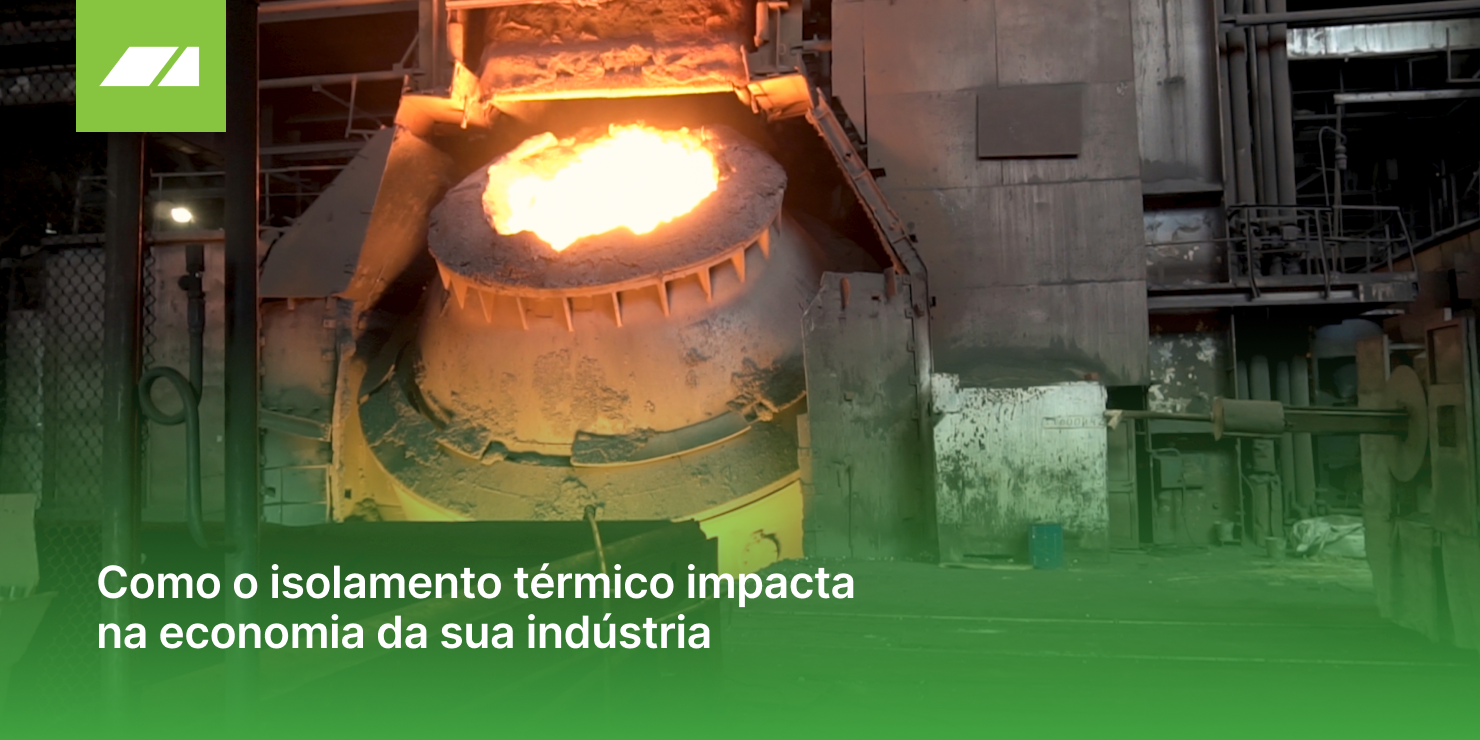
Confira as etapas para calcular a economia do isolamento térmico do seu forno, com exemplo real de retorno em menos de 09 meses


